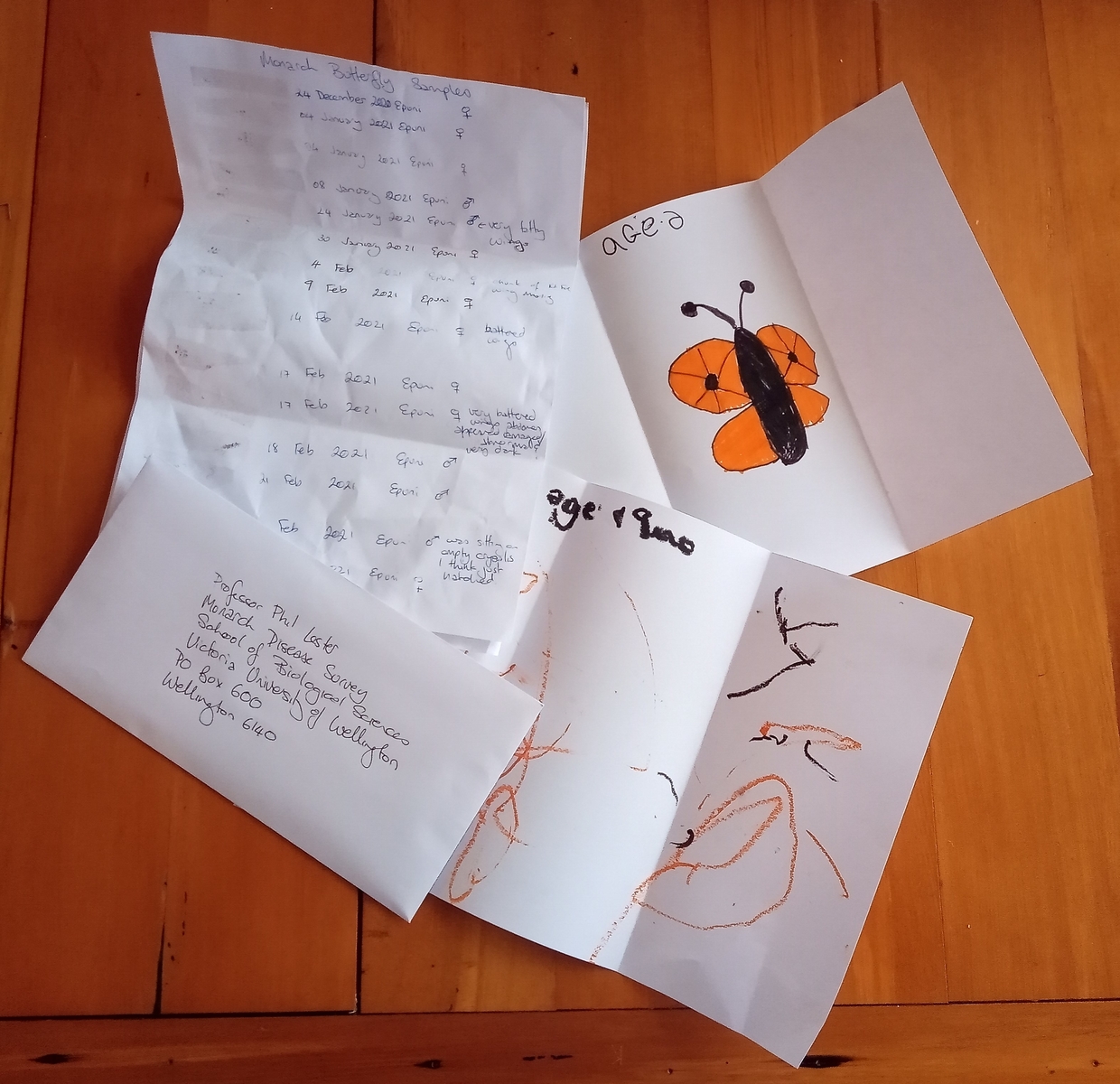
We have a whole bunch of swan plants (Gomphocarpus physocarpus) in our garden in order to attract monarch butterflies into the neighbourhood. This year we participated in Professor Phil Lester‘s (Victoria University of Wellington Te Herenga Waka) citizen science project Tracking Disease in New Zealand’s Monarch Butterflies.
Professor Lester is investigating the infection of monarch butterflies with the OE parasite (Ophryocystis elektroscirrha) which, in adult butterflies, can cause crumpled and deformed wings. Currently the rates of this infection in New Zealand monarch butterflies are not known. Our samples will help answer this question.
Things you will need:
Swan plants to attract monarch butterflies
Clear sellotape/scotch
Paper and pen
Instructions:
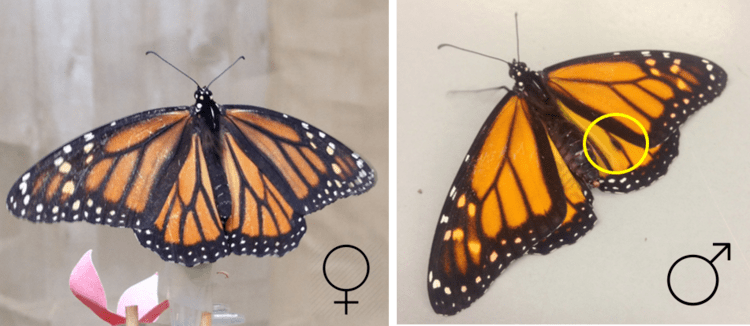
Before you pick up the monarch butterfly determine the sex of the butterfly. This can be done by looking at the wings. Male monarchs have scent spots on their hind wings as shown by the picture below from the butterfly biology blog. Follow the link if you want to know more about telling male and female butterflies apart.
Professor Lester recommends following the method shown in the video below to safely catch a monarch butterfly:
Touch the sticky side of a piece of clear tape to the butterflies abdomen. This will harmlessly collect a small number of the butterflies scales. You will be able to see a few black specks remain on the tape.
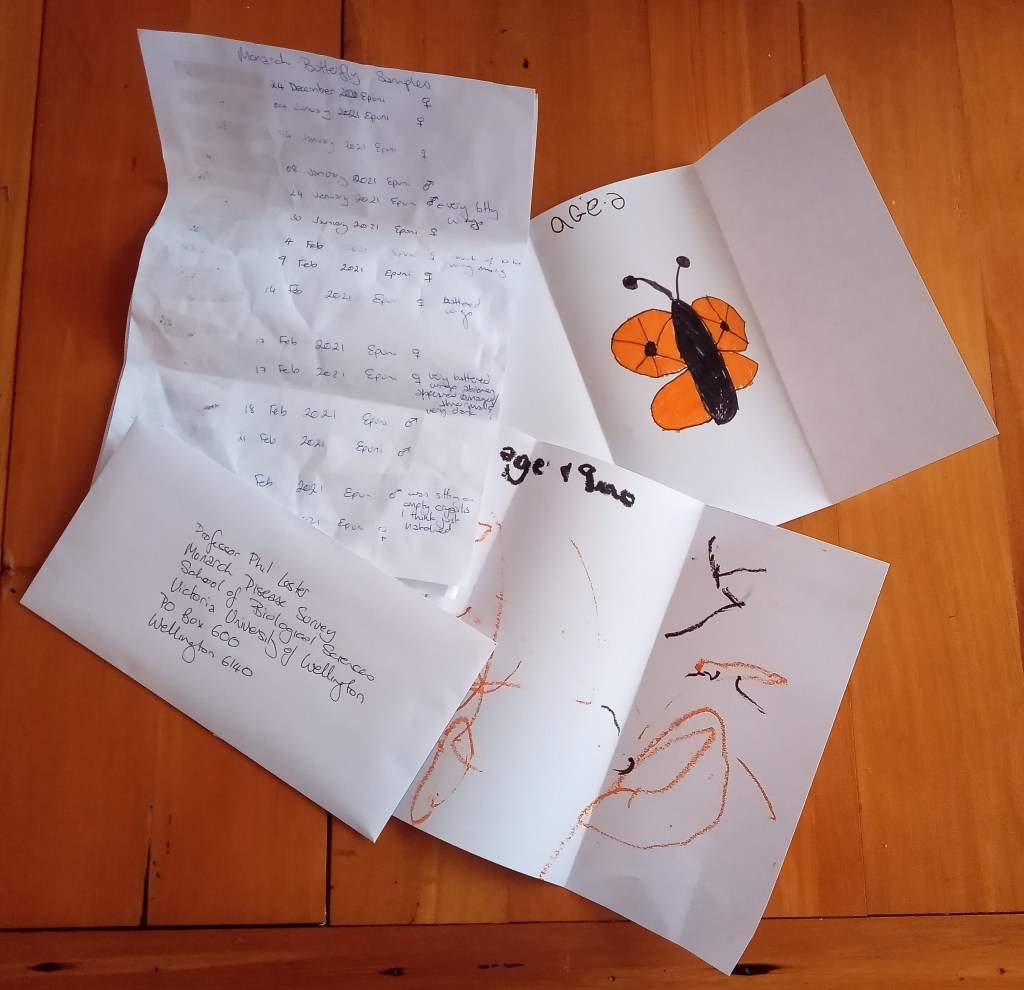
The piece of tape can then be stuck to a piece of paper. Then write the date, sex of the butterfly and the location where you collected the sample next to it.
Once you have collected all your samples they can be sent to Professor Lester.
What the kids can do:
Miss 6 helped keep an eye out for butterflies sitting on our swan plants. At the start of the season she was squeamish about touching them. But by the end she was asking to hold them while I took the scale sample.
Both kids drew a butterfly picture to send along with the samples. Well Mr 19 months’ picture was more of a bunch of squiggles, but Miss 6 drew a “boy” monarch, you can tell because she put spots on his wings.
 Keeping Them Occupied